

Stress has become an unavoidable part of modern Indian life. Whether you are navigating Bengaluru’s traffic, meeting a Mumbai deadline, or managing family expectations in a Tier-2 city, the pressure never really stops. People are constantly looking for ways to decompress, reset, and find stillness. Two practices that have gained serious attention in this space are Float Therapy and meditation. Both promise relief. Both deliver. But they do it very differently and understanding that difference could change how you approach your mental wellness routine.
What Is Meditation, Really?
Most Indians have grown up with some version of meditation, whether it was a grandparent’s morning prayer ritual, a yoga class at school, or a guided breathing session at a corporate wellness program. At its core, meditation is the practice of training your attention and awareness to achieve a mentally clear and emotionally calm state.
It requires nothing but time and willingness. You can meditate on a terrace, in a temple, inside a quiet room, or even on a moving train if you have built the habit. There are dozens of styles Vipassana, transcendental meditation, mindfulness-based stress reduction (MBSR), pranayama-based practices, and more.
The challenge? Meditation demands discipline. For a beginner, sitting still for even ten minutes while the mind races through grocery lists and unread emails is genuinely hard. Research consistently shows that meditation reduces cortisol, lowers blood pressure, and improves emotional regulation but these benefits build gradually, often over weeks and months of consistent practice.
So What Exactly Is Float Therapy?
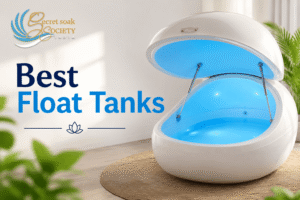
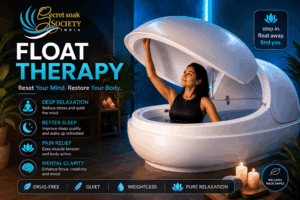
Float Therapy also called sensory deprivation or floatation REST (Restricted Environmental Stimulation Therapy) is a newer and more immersive experience. You float effortlessly in a pod or room filled with water saturated with Epsom salt (magnesium sulphate). The water is kept at skin temperature, roughly 34–35°C, which makes it almost impossible to tell where your body ends and the water begins.
The pod is completely dark and silent. There is no gravity pulling on your joints. No sound to process. No light to react to. No phone notification. Your nervous system, for perhaps the first time in months, has absolutely nothing it needs to respond to.
This is where it gets interesting. Within twenty to thirty minutes, most people enter a deep theta brainwave state, the same state experienced by long-time meditators during deep practice. The difference is that Float Therapy essentially takes you there without the years of training. Your brain slips into it naturally because all external stimulation has been removed.
The Science Behind the Calm
Both practices have credible science backing them up. Meditation’s research base is decades old. Studies published across Harvard Medical School, NIMHANS in Bengaluru, and dozens of global institutions confirm its impact on anxiety, depression, and cognitive performance.
Float Therapy research is younger but growing. Studies from the Laureate Institute for Brain Research in the United States show significant reductions in anxiety after just one float session. Magnesium absorbed through the skin during a float session is also associated with improved sleep quality and reduced muscle tension, as supported by research from National Institutes of Health.
The physiological overlap is real: both practices lower cortisol, activate the parasympathetic nervous system, and reduce the body’s fight-or-flight response. The key difference is the pathway.
Float Therapy vs Meditation: Side-by-Side
Category | Float Therapy | Meditation |
How it works | Sensory deprivation in salt-saturated water removes all external stimuli | Trains the mind to focus inward through breath, mantra, or observation |
Speed of results | Faster noticeable within a single session | Gradual — takes weeks to months of consistent practice |
Ease for beginners | Easy — no training needed; body relaxes naturally | Challenging — requires discipline to quiet a busy mind |
Physical benefits | Strong — muscle relief, joint decompression, magnesium absorption, better sleep | Limited — primarily mental; indirect physical benefits over time |
Mental clarity | High — deep theta state reached quickly | Very High — deep clarity builds over long-term practice |
Cost | Paid — ₹2,000–₹4,500 per session in India | Free — no cost; apps optional |
Accessibility in India | Limited — available in select metros (Mumbai, Bengaluru, Delhi, Hyderabad) | Universal — available everywhere, anytime |
Long-term sustainability | Periodic — best as a monthly or bi-weekly reset | Daily habit — compounds into a lifelong practice |
Anxiety relief | Immediate — clinically shown to reduce anxiety after one session | Progressive — reduces anxiety with consistent practice |
Best suited for | Burnout recovery, athletes, chronic stress, sleep issues, first-timers | Daily mental hygiene, emotional regulation, long-term resilience |
Float Therapy vs Meditation: A Real-World Take
- Accessibility: Meditation wins here. It costs nothing and can be done anywhere. Float Therapy requires access to a float centre, which while growing is still limited to major metros in India. Cities like Mumbai, Bengaluru, Hyderabad, and Delhi have seen an uptick in wellness centres offering floatation experiences, and float therapy India is slowly building its audience among urban professionals, athletes, and people dealing with chronic stress.
- Speed of results: Float Therapy delivers faster. A first-time floater often reports feeling profoundly relaxed, mentally clear, and emotionally lighter within a single ninety-minute session. Meditation, for most beginners, takes weeks to produce noticeable effects. If you are someone who has tried meditating and felt frustrated because your mind refuses to quiet down, floating can feel like a revelation.
- Depth of stillness: Both can take you deep, but they do so differently. A seasoned meditator with twenty years of practice may access states of consciousness that rival or exceed what a float session produces. But for the average person dealing with stress relief India conversations in their doctor’s office or wellness group, floating offers a shortcut to genuine stillness without the prerequisite of discipline.
- Physical benefits: Float Therapy has a clear advantage. The Epsom salt solution relieves joint pressure, reduces muscle inflammation, and aids recovery. This is why athletes from Virat Kohli’s fitness staff to international sports teams have explored floatation as part of recovery protocols. Meditation does not offer these physical benefits directly.
- Sustainability: Meditation is more sustainable as a daily habit. You cannot float every day practically or financially. Meditation, once internalized, becomes a lifelong tool you carry everywhere. The ideal scenario is to use both floating for periodic deep resets and meditation for daily maintenance.
Who Should Try Float Therapy?
Float therapy benefits are especially meaningful for specific groups. If you are an IT professional in Pune or Hyderabad dealing with burnout, a new mother running on broken sleep, a student crushed under exam pressure, or a corporate leader making high-stakes decisions daily a float session can offer the kind of nervous system reset that a vacation sometimes fails to deliver.
It is also worth noting that floatation has shown promising results for people dealing with anxiety disorders, PTSD symptoms, fibromyalgia, and chronic pain. In India, where mental health conversations are finally becoming less stigmatized, float therapy offers a non-clinical, non-pharmaceutical entry point into serious self-care.
Those who are claustrophobic may feel initial resistance but most modern float centres offer open rooms rather than enclosed pods, and trained staff help ease first-timers through the experience. The discomfort, when it exists, usually dissolves within the first fifteen minutes.
Who Should Stick with Meditation?
Meditation remains unbeatable for anyone building long-term mental resilience. If you are someone who wants daily practice, a tool that travels with you, a habit that compounds over time, meditation is irreplaceable. It builds the mental muscle needed to respond rather than react, to observe thoughts without drowning in them.
In a country with such a rich tradition of meditative practices from the Vipassana centres of Igatpuri to the ashrams of Rishikesh meditation is not just a wellness trend. It is part of a cultural inheritance. Reconnecting with it, even imperfectly, offers something that no pod or salt bath can replicate: a relationship with your own mind.
The Verdict: Do You Have to Choose?
Not really. Float Therapy vs Meditation is not a competition, it is a conversation about different tools for the same goal. Think of floating as a deep cleanse and meditation as daily hygiene. One resets you at depth; the other maintains you.
For someone just beginning their stress relief journey, float therapy can be a powerful first experience, something so undeniably effective that it motivates further exploration of mindfulness and meditation. For a seasoned meditator, floating can open new dimensions of stillness.
If you are in India and curious about where to begin your float experience, Secret Soak Society is creating thoughtful, accessible spaces for exactly this kind of exploration. As awareness around float therapy India continues to grow, Secret Soak Society is part of a quiet revolution in how urban Indians are choosing to meet their stress not with suppression, but with surrender.
What Is Float Therapy? A Complete Guide for Indians
Curious about a powerful way to relax your mind and body? Discover how float therapy works, its science-backed benefits, and why it’s gaining popularity across India. From stress relief to deep recovery, this guide covers everything you need to know before your first session. Read the full guide now.
FAQs (Frequently Asked Questions)
Q1. What is float therapy and how does it work?
Float therapy involves lying in a saltwater pod filled with Epsom salt that makes your body float effortlessly. The dark, silent environment removes all sensory input, allowing your mind and body to deeply relax.
Q2. Is float therapy available in India?
Yes, float therapy India is growing with centres now available in cities like Mumbai, Bengaluru, Pune, Hyderabad, and Delhi. Prices typically range between ₹2,500 to ₹6,000 per session.
Q3. What are the benefits of float therapy?
Float therapy helps reduce stress, anxiety, chronic pain, and improves sleep quality and mental clarity. Regular sessions also support muscle recovery, creative thinking, and overall nervous system reset.
Q4. Is sensory deprivation tank safe for beginners?
Yes, a sensory deprivation tank is completely safe for first-timers as the water is only knee-deep and you control the light and lid at all times. It is not recommended for people with epilepsy, open wounds, or severe claustrophobia.
Q5. How long is one float therapy session?
A standard float therapy session lasts between 60 to 90 minutes, which is considered ideal for experiencing full mental and physical benefits. First-time floaters are usually recommended to start with a 60-minute session.