
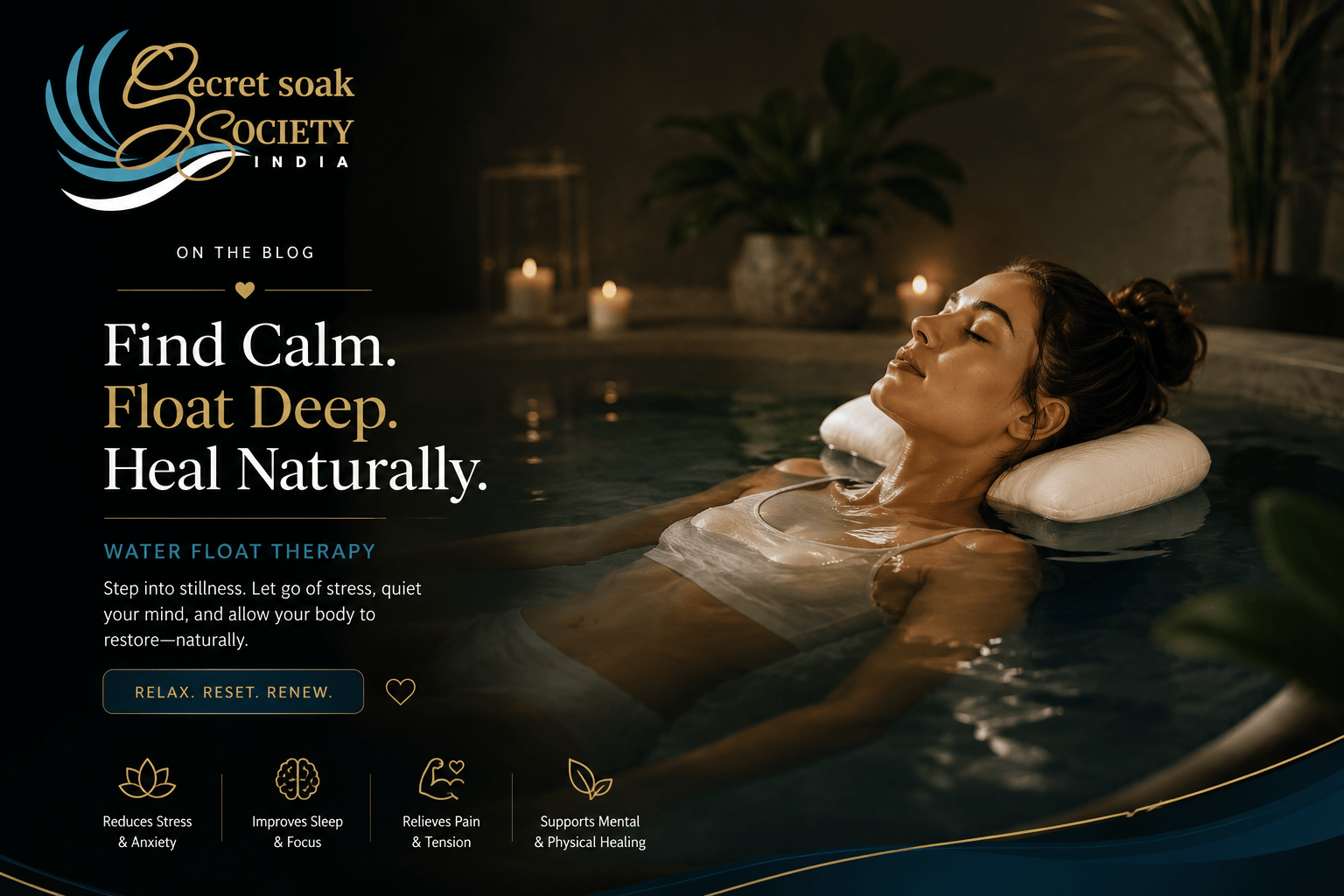
Water floating therapy, also known as float therapy or sensory deprivation therapy, is a wellness experience where a person floats effortlessly in warm water filled with a high concentration of Epsom salt.
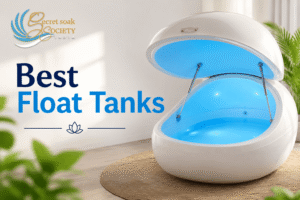
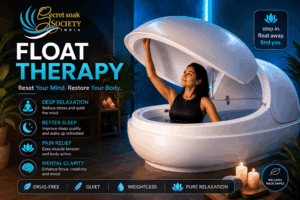
The therapy usually takes place inside a specially designed float tank or float pod. The salt concentration makes the body naturally float without effort.
Inside the float tank:
- The environment is quiet
- The lights are dim or turned off
- External distractions are reduced
- The water temperature matches skin temperature
This creates a deeply relaxing experience for both the mind and body.
Many people describe float therapy as:
- Peaceful
- Mentally calming
- Meditative
- Refreshing
- Deeply relaxing
Why Float Therapy Is Growing Rapidly in India
Modern life in India is becoming increasingly stressful.
People today spend hours dealing with the following:
- Traffic congestion
- Long working hours
- Mobile phone addiction
- Social media overload
- Poor sleep habits
- Mental fatigue
- High-performance work culture
Cities like Mumbai and Pune are always active. While this fast-paced lifestyle creates opportunities, it also increases stress and burnout.
As awareness around wellness and mental health grows, many people are turning toward natural relaxation experiences instead of temporary distractions.
Float therapy offers something rare in modern life:
Complete stillness.
That is why searches related to:
- “float therapy India”
- “water floating therapy near me”
- “float tank benefits”
- “stress relief therapy India”
- “sensory deprivation tank India”
have increased significantly in 2026.
How Does Float Therapy Work?
Float tanks contain shallow water mixed with hundreds of kilograms of Epsom salt. This makes the water highly buoyant, allowing the body to float naturally.
During the session:
- You enter the float pod
- Lie back in the warm water
- Your body begins floating effortlessly
- Noise and distractions reduce
- Your nervous system slowly relaxes
Because the brain receives less sensory input, many people experience deep mental relaxation.
This is why float therapy is also called the following:
Sensory Deprivation Therapy
or
REST Therapy (Restricted Environmental Stimulation Therapy)
Benefits of Water Floating Therapy
1. Stress Relief
One of the biggest reasons Indians are trying float therapy is stress reduction.
Modern lifestyles often leave people mentally exhausted. Float therapy creates a peaceful environment where the mind can finally slow down.
Many people report feeling:
- Mentally lighter
- More relaxed
- Emotionally refreshed
- Less overwhelmed
For professionals working in busy Indian cities, this mental reset is becoming highly valuable.
2. Better Sleep Quality
Poor sleep has become extremely common due to:
- Excessive screen time
- Work pressure
- Anxiety
- Irregular schedules
Many float therapy users say they sleep better after sessions because the body enters a deeply relaxed state during floating.
3. Mental Calmness
People today rarely experience silence.
Float therapy temporarily removes many external distractions, allowing the brain to rest from constant stimulation.
This may help people feel
- Calmer
- More focused
- Mentally refreshed
- Less mentally fatigued
4. Muscle Relaxation and Recovery
Float therapy is increasingly popular among:
- Gym-goers
- Athletes
- Yoga practitioners
- Runners
- Fitness enthusiasts
The floating environment reduces pressure on muscles and joints, helping the body relax naturally.
5. Digital Detox Experience
Most people spend hours every day looking at screens.
Float therapy provides a temporary escape from:
- Notifications
- Emails
- Calls
- Social media
- Digital noise
That break from technology is one major reason younger professionals are trying float therapy in India.
Why India Is Becoming a Wellness Hub
India has seen rapid growth in wellness awareness over the last few years.
People are increasingly exploring:
- Meditation
- Yoga
- Recovery therapies
- Mental wellness practices
- Alternative wellness experiences
Cities like Mumbai and Pune are becoming wellness-focused urban centers where people actively invest in stress management and self-care.
Float therapy fits perfectly into this growing wellness culture.
What Happens During Your First Float Session?
Most first-time floaters feel curious before their session.
A typical float session usually includes:
Before Floating
- Quick instructions
- Shower before entering the tank
- Optional earplugs
During Floating
- Floating in warm salt water
- Quiet surroundings
- Dim lighting or darkness
- Deep relaxation experience
After the Session
- Shower after floating
- Feeling refreshed and calm
Most sessions last between 60 and 90 minutes.
Is Float Therapy Safe?
For most healthy people, water float therapy is generally considered safe when done at a professional wellness center with proper hygiene and maintenance.
However, people with certain medical conditions should consult a healthcare professional before trying float therapy.
Who Should Avoid Float Therapy?
You should speak with a doctor before floating if you have the following:
- Serious heart conditions
- Open wounds
- Severe skin conditions
- Severe claustrophobia
- Epilepsy
- Certain medical concerns
Pregnant individuals should also seek medical advice first.
Common Myths About Float Therapy
Myth 1: “You Can Sink”
The high salt concentration naturally keeps your body floating.
Myth 2: “It Is Claustrophobic”
Many modern float tanks are spacious and designed for comfort.
Myth 3: “Only Spiritual People Try Float Therapy”
Float therapy is used by professionals, athletes, entrepreneurs, students, and everyday people looking for relaxation.
Myth 4: “It Is Just a Wellness Trend”
Float therapy has existed for decades and continues growing because many people genuinely enjoy the calming experience.
Final Thoughts
Modern life in India is becoming faster, louder, and more stressful every year.
People are searching for ways to disconnect from constant stimulation and reconnect with mental calmness.
Water floating therapy offers a rare opportunity to experience:
- Silence
- Stillness
- Deep relaxation
- Mental recovery
- Physical calmness
That is why more Indians are exploring float therapy in 2026.
As wellness awareness continues growing across India, float therapy is expected to become one of India’s most talked-about relaxation experiences.