
In the heart of bustling Indian cities, where traffic horns, endless meetings, and family responsibilities keep our nervous systems on high alert, true rest has become a luxury few can afford. As someone who has guided hundreds of clients through float sessions over the past five years, I’ve watched the science unfold in real time. Float therapy – formally known as Flotation-Restricted Environmental Stimulation Therapy, or Float-REST – is far more than a quiet hour in a tank. It is a precisely controlled environment that gives the brain and body something modern life rarely provides: complete sensory rest.
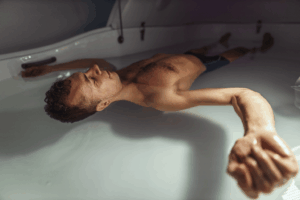
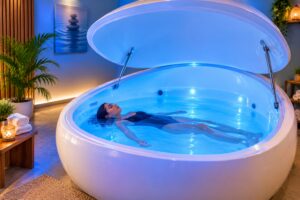
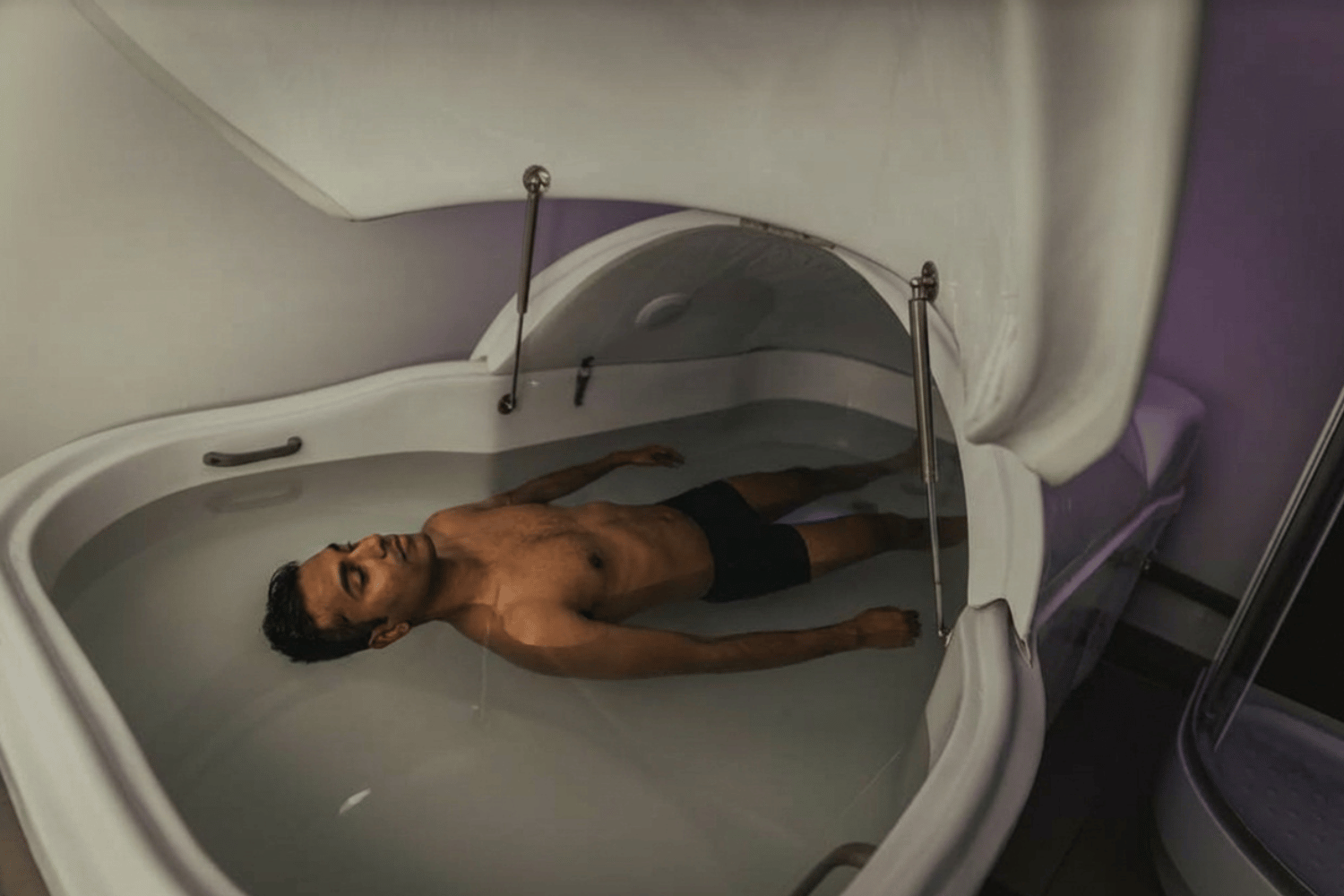
You enter a private, soundproofed room and lie in warm water saturated with Epsom salt. The solution is heated to skin temperature, so you float effortlessly with no pressure points. Lights dim, the world outside fades, and for 45 to 60 minutes every external input – gravity, sound, light, even the feel of clothing – disappears. What happens next is remarkable.
Within 15–20 minutes, brainwave patterns shift. High-frequency beta waves (the “always-on” state familiar to every professional juggling deadlines in Mumbai or Bengaluru) give way to slower theta waves, the same state seen in deep meditation and early sleep. Recent systematic reviews confirm this transition. A 2025 comprehensive analysis of 63 studies involving 1,838 participants found consistent reductions in stress hormones, muscle tension, and anxiety, alongside improvements in mental wellbeing and pain perception. Another 2026 scoping review of eight controlled trials showed significant drops in anxiety and depression scores, with many participants reporting lasting calm that extended well beyond the session.
Physiologically, blood pressure often falls noticeably – one landmark 2018 study recorded drops exceeding 12 mm Hg during the float. Cortisol levels decline, inflammation markers ease, and the body enters a profound recovery mode. The magnesium in the solution plays a supportive role; while full-body absorption debates continue, emerging research shows ions can penetrate skin layers, particularly through hair follicles, aiding muscle relaxation.
Most striking is the effect on the brain’s networks. Float-REST quiets the salience network (the part constantly scanning for threats) while gently activating areas linked to self-reflection and creativity. Clients who arrive tense from long commutes or back-to-back calls often leave describing a clarity they haven’t felt in years.
The science is clear: in an age of constant stimulation, Float-REST offers the nervous system a rare chance to repair rather than defend. For busy Indians seeking measurable restoration, this is not indulgence – it is precise, evidence-based self-care.
References
1. Lashgari, E., Chen, E., Gregory, J., & Maoz, U. (2025). A systematic review of Flotation-Restricted Environmental Stimulation Therapy (REST). medRxiv preprint. https://doi.org/10.1101/2023.11.29.23299203v2 (updated 2025).
2. Feinstein, J.S., et al. (2018). Examining the short-term anxiolytic and antidepressant effect of Floatation-REST. PLOS ONE, 13(2), e0190292.
3. Feinstein, J.S., et al. (2018). The elicitation of relaxation and interoceptive awareness using Floatation-REST in individuals with high anxiety sensitivity. Biological Psychiatry: Cognitive Neuroscience and Neuroimaging, 3(6), 555–562.
4. Stuart, S.J., et al. (2026). A scoping review of Flotation-REST for chronic pain and associated comorbidities. Journal of Pain Research.
5. Hruby, H., et al. (2024). Induction of altered states of consciousness during Floatation-REST. Scientific Reports.