
Many of the clients I work with in our urban wellness center already follow yoga or Ayurvedic routines. They come seeking deeper stillness amid the noise of city life. What surprises them—and delights me as a practitioner rooted in Indian traditions—is how closely float therapy echoes one of yoga’s most profound practices: Pratyahara.
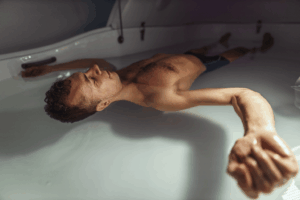
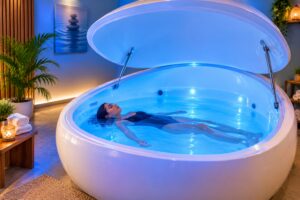
In Patanjali’s Yoga Sutras, Pratyahara is the fifth limb—the deliberate withdrawal of the senses from external objects so awareness can turn inward. Ancient sages retreated to caves or forests for this experience. Today, in Delhi traffic or Hyderabad’s tech corridors, that level of withdrawal feels nearly impossible. A float session delivers it naturally. No light, no sound, no physical distraction—just effortless buoyancy and silence. The senses rest completely, allowing the mind to settle into the space between thoughts.
This mirrors another classic Ayurvedic therapy many Indians already know: Shirodhara, where a steady stream of warm oil calms the mind and balances Vata dosha. Both practices reduce sensory overload, but floating adds complete physical support, enabling even deeper release for those new to meditation or carrying the weight of long workdays.
In my experience, clients who struggle with racing thoughts during traditional sitting meditation often find long stretches of effortless quiet inside the tank. One senior executive from Pune described it as finally understanding what his guru meant by “the still lake of the mind.” The theta-wave state encouraged by floating creates ideal conditions for the next limbs—Dharana (concentration) and Dhyana (meditation)—to arise without force.
The magnesium-rich environment also resonates with traditional Ayurvedic use of mineral salts and herbal baths for nervous-system calming and muscle recovery. We are not replacing our heritage; we are giving it a practical, urban expression that fits busy modern schedules.
For anyone already walking the path of yoga, Ayurveda, or daily mindfulness, floating becomes a powerful companion. It deepens practices you already love without requiring new rituals or beliefs. In a country rich with ancient wisdom, float therapy simply offers a contemporary doorway back to the inner quiet our traditions have always pointed toward.
References
- Patanjali. Yoga Sutras (translated editions referencing Pratyahara as the fifth limb).
- Kjellgren, A., et al. (2014). Beneficial effects of sensory isolation in flotation tank. PMC4219027.
- Feinstein, J.S., et al. (2018). Floatation-REST induces relaxation and heightened interoceptive awareness. Biological Psychiatry.
- Lashgari, E., et al. (2025). Systematic review of Floatation-REST effects on consciousness and psychological states.
- Traditional Ayurvedic texts (Caraka Samhita references to Shirodhara and sensory calming practices).