

There is a particular kind of tiredness that sleep does not fix. You lie down, close your eyes, and your brain just keeps replaying conversations, running through tomorrow’s to-do list, carrying a low hum of anxiety you cannot quite name. That is not a weakness. That is a nervous system that has forgotten what stillness feels like.
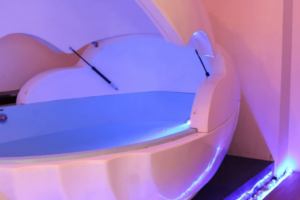
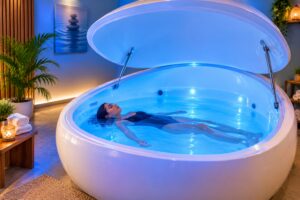
Float session therapy is not a spa trend. It is one of the more honest attempts at giving your brain something it genuinely cannot find in everyday life: a complete break from input. No light, no sound, no sensation of where your body ends and the water begins. Just you, floating in a Liquid sanctuary, while your brain quietly starts doing something remarkable.
Here is what neuroscience actually says about why it works.
Your Brain Is Not Built for the World You Live In
The human brain evolved to handle real threats, predators, danger, and survival. The problem is that it never got the memo that back-to-back meetings and overflowing inboxes are not life-threatening. Your amygdala cannot tell the difference. It treats both the same: threat detected, stress response on.
For most people, this response never fully switches off. You carry cortisol and tension through the day like a backpack you forgot you were wearing. Over time, the stress circuitry gets faster, more sensitive, quicker to fire, and your brain slowly loses its ability to feel genuinely calm, even on a good day.
Float therapy interrupts that cycle. The moment the tank goes quiet, your amygdala receives a signal it rarely gets in modern life: nothing here is a threat. And for once, it actually listens.
The Shift Into Theta Why It Matters
Most of your waking life runs on Beta brainwaves, active, thinking, problem-solving. When you relax properly, you might dip into Alpha. But Theta, sitting between 4 and 8 Hz, is where something genuinely different happens.
Theta is that brief, liquid moment just before sleep where thoughts become images and ideas arrive from nowhere. During float session therapy, your brain reaches it naturally, sometimes within 30 to 40 minutes, and holds it longer than almost anything else can produce. What happens in that state:
- Emotional memories get processed without the usual resistance
- Creative thinking becomes more fluid and less forced
- Deep learning and pattern recognition quietly activate in the background
Creatives chase this state. Meditators train for years to reach it. Floating gets you there without asking you to try.
What Magnesium Is Actually Doing
The float tank contains hundreds of kilograms of Epsom salt magnesium sulfate. Most people stop at “it helps with muscle tension.” But the neurological role goes further.
Magnesium supports GABA, the brain’s primary calming neurotransmitter, and limits the overactivation of stress receptors that get flooded during chronic pressure. It is also a mineral your body actively depletes when stressed, so floating is partially replenishment. While you are in the tank, your skin absorbs it directly from the water throughout the entire session.
This is why people describe the float massage effect as something different from a regular massage. No therapist involved. Your own biology does the work, chemically supported by what you are floating in.
How It Compares to Other Approaches
Meditation has real value, but it asks for sustained attention, daily practice, and patience measured in months. Massage gives your muscles relief but keeps your senses engaged the whole time. Float session therapy removes the task entirely. A few honest differences worth knowing:
- Meditation requires effort and consistency before deep states become accessible
- Massage addresses the physical layer but rarely reaches the neurological one
- Float therapy drops you into deep Theta automatically, without prior experience or practice needed
For someone running on empty, that gap is not small.
What Couples Float Therapy Actually Offers
This one surprises people. Couple floating therapy is not about having a shared conversation or working through something in the water. It is the opposite of two people choosing, for an hour, to stop being productive and simply exist in the same regulated space.
When two nervous systems decompress together, defensive walls come down without anyone having to ask. The pressure to fix, perform, or respond disappears for a while. Conversations after the session tend to feel quieter, more open, and less reactive. Partners often reconnect through shared stillness rather than shared words. The tank does not solve anything between two people. But it lowers the noise enough that clearer thinking has room to arrive.
The Days After Matter Too
One session does not permanently rewire your brain. But the 24 to 48 hours following a float are worth paying attention to. Sleep feels deeper. A stuck problem suddenly feels more approachable. Difficult conversations go better because reactions feel less sharp. There is a general sense of spaciousness that is hard to name but easy to feel.
The more consistently you float, the better your brain gets at finding that state on its own. It builds quietly over time.
Is It Worth Trying?
If your nervous system is running hot and nothing you are already doing is fully touching it, yes. Not because a Liquid sanctuary fixes everything, but because most people have genuinely never experienced that quality of quiet. An hour with zero input, zero obligation, zero screens. Just your breathing, and the slow realization that you had been carrying more than you knew.
Float therapy is not a replacement for sleep or addressing stress at its root. But as a tool for giving your brain an actual break, the kind it can build from very little comes close.